kamera och videoredigering: 7 tips du kan använda direkt
Kort Sammanfattning
Kort sammanfattning
Cameras and video editing offer powerful tools for creativity and documentation, but navigating their complexities can be daunting for beginners. Here are key points to consider:
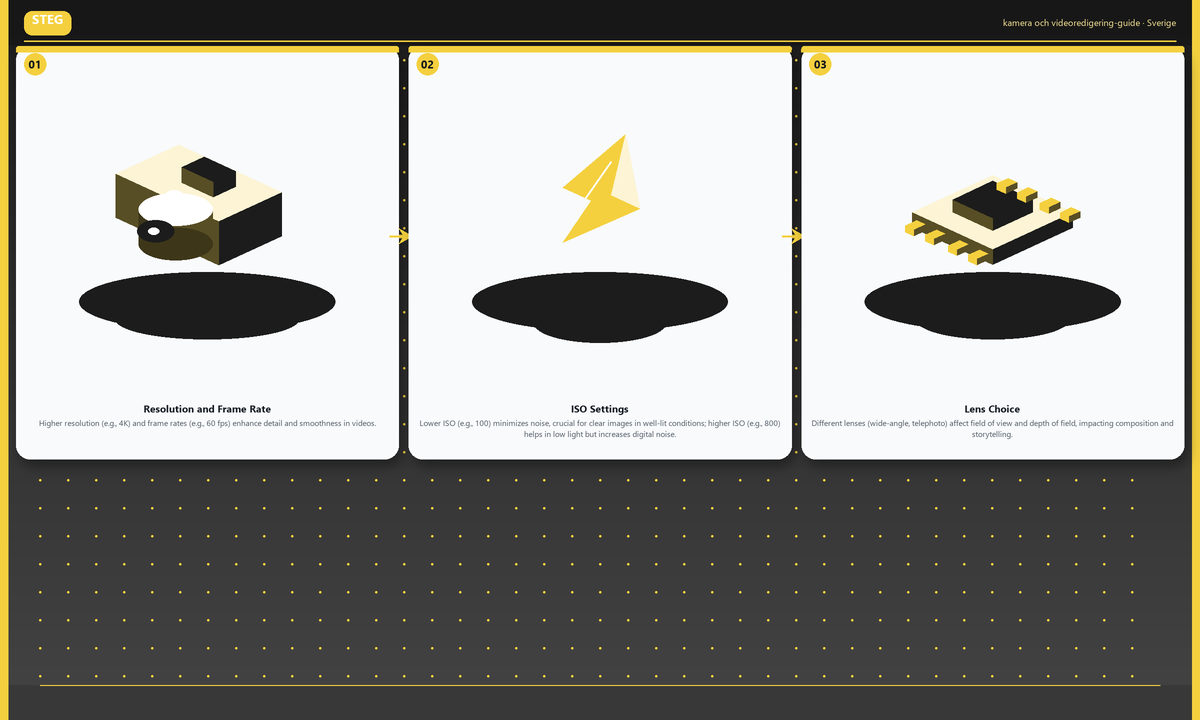
- Resolution and Frame Rate: Higher resolution (e.g., 4K) and frame rates (e.g., 60 fps) enhance detail and smoothness in videos.
- ISO Settings: Lower ISO (e.g., 100) minimizes noise, crucial for clear images in well-lit conditions; higher ISO (e.g., 800) helps in low light but increases digital noise.
- Lens Choice: Different lenses (wide-angle, telephoto) affect field of view and depth of field, impacting composition and storytelling.
Praktiska Tips
Effective use of cameras and editing software hinges on practical know-how:
- Stabilization Techniques: Use tripods or stabilizers to avoid shaky footage; for handheld shots, practice slow, steady movements.
- Lighting: Natural light is ideal; supplement with softboxes or reflectors to manage shadows and highlights effectively.
- Focus and Exposure: Autofocus and exposure modes can be handy, but manual settings offer greater control over image quality, especially in challenging lighting conditions.
Praktiska tips
Så Väljer Du
Choosing the right equipment and settings depends on your specific needs and goals:
- Purpose: Define whether you aim for professional videography, casual vlogging, or photography. Each has distinct equipment requirements.
- Budget: Invest in quality over quantity; a few essential pieces like a good camera body and lens are more impactful than numerous mediocre accessories.
- Research: Read reviews, watch tutorials, and experiment to understand what works best for your style and projects.
Jämförelse
Comparing different cameras and editing tools highlights key differences:
Så väljer du
- Camera Types: Mirrorless vs. DSLR; each has pros in portability and image quality respectively.
- Editing Software: Adobe Premiere Pro vs. Final Cut Pro X; both offer robust features but cater to different workflows and budgets.
- Cost vs. Performance: Higher-end models offer superior performance but may not justify the cost for casual users.
Vanliga Frågor
RAW eller JPEG som nybörjare?
- RAW: Offers superior image quality and flexibility in editing but requires more storage space and processing power.
- JPEG: Easier to manage in terms of file size and immediate usability, suitable for most casual photography and videography needs.
Bländare, slutare eller ISO först i dåligt ljus?
Jämförelse
- ISO First: Adjust ISO to compensate for low light conditions before changing apertures or shutters speeds to maintain sharpness and exposure balance.
- Aperture: Adjust the aperture (f-stop) to control depth of field and light intake.
- Shutter Speed: Adjust shutter speed to manage motion blur and exposure, especially important in dynamic scenes.
Behöver jag drönartillstånd i den här parken?
- Check Local Regulations: Always verify if drone flying is permitted in the area and obtain necessary permissions.
- Safety First: Ensure safe distances from people and sensitive areas; use visual observers if required by regulations.
- Weather Conditions: Avoid flying in strong winds or poor visibility conditions to maintain safety and control.
This structured guide aims to provide beginners with clear, actionable advice on choosing and using cameras and video editing tools effectively while addressing common queries in a straightforward manner.